Tag: penicillin

  • Scientific Experiments That Changed the Future of Humanity

    Scientific Experiments That Changed the Future of Humanity

    Introduction

    If we look around us today, almost everything that defines modern life exists because of science. However, we rarely think about where these advancements actually come from. Behind electricity, medicine, mobile phones, and even the internet, there are scientific experiments that once seemed like simple laboratory tests but ended up changing the future of humanity.

    What is even more interesting is that many of these experiments were not originally designed to be revolutionary discoveries. Some came from mistakes, others from extreme curiosity, and many from very simple questions that no one had seriously asked before.

    Science does not always move in a straight line. Sometimes it progresses in unexpected leaps, and those leaps are what completely transform how we understand reality.

    In this article, we will explore some of those key moments in scientific history that did not just change theories, but reshaped reality itself.

    When Humanity Began Questioning Reality

    For a long time, humans believed that the world was simple and predictable. It was assumed that objects fell in a certain way, that matter was solid, and that life followed basic and understandable rules.

    But as scientists began to experiment more deeply, they discovered that reality was far stranger than expected.

    One of the first major shifts happened when motion was studied with greater precision. It was discovered that the way objects fall does not depend on their weight, as previously believed, but on more fundamental factors.

    This kind of discovery did not just change physics; it changed how humanity understood the entire universe.

    The Birth of Modern Science

    Over time, experiments became more precise and controlled. Science stopped being just observation and became a discipline based on testing, measurement, and repeatable results.

    This was the moment when the first truly world-changing experiments began to appear.

    One of the most important shifts was the realization that nature does not always behave in an intuitive way. Many things that seem obvious in daily life behave completely differently when studied scientifically.

    This realization became the foundation of modern science.

    When the Invisible Became Real

    One of the greatest breakthroughs in science happened when researchers realized that not everything important can be seen directly.

    Forces like electricity, magnetism, and even the internal structure of matter are invisible, yet they can be studied through their effects.

    This completely changed how reality was understood.

    From that moment on, science no longer depended only on what could be seen, but also on what could be measured indirectly.

    This shift became essential for the development of modern technologies such as electrical energy, engines, electronics, and communication systems.

    The Discovery That Matter Is Not What It Seems

    As scientific research progressed, it was discovered that matter is not continuous or solid in the way it appears. Instead, it is made up of extremely small structures that cannot be seen with the naked eye.

    This discovery opened the door to modern physics and helped explain how atoms, molecules, and fundamental forces work.

    What is even more surprising is that at this microscopic level, the rules of classical physics no longer apply in the same way.

    This led to the creation of a new branch of science that studies matter at extremely small scales.

    Science That Challenged Common Sense

    As experiments became more advanced, scientists began observing phenomena that could not be explained by everyday logic.

    In some cases, particles behaved like waves. In others, their behavior seemed to change depending on whether they were being observed.

    These results did not just surprise scientists; they forced a complete rethinking of reality itself.

    From these discoveries, a new scientific worldview emerged—one based on probability, uncertainty, and non-intuitive behavior.

    When Science Entered Everyday Life

    Many of the most important scientific experiments did not only change theories but also had a direct impact on daily life.

    The development of electricity, for example, completely transformed how humans live. What was once darkness and limitation became light, energy, and technology.

    Later, other discoveries enabled communication systems, transportation, advanced medicine, and computing.

    Today, almost everything we use depends on those early scientific breakthroughs.

    The Revolution of Modern Medicine

    One of the most impacted fields by scientific experimentation has been medicine.

    For centuries, diseases were a mystery. However, experiments with microorganisms showed that many illnesses are caused by invisible living agents.

    This discovery completely changed medical treatment.

    From that point on, hygiene practices, vaccines, and life-saving treatments were developed, saving millions of lives.

    It was also discovered that certain natural compounds could fight infections, which led to the development of antibiotics.

    This became one of the most important milestones in human history.

    The Rise of the Technological Era

    Over time, science began to explore energy and the structure of the atom. These studies led to entirely new technologies.

    Understanding energy made it possible to develop advanced electrical systems, while atomic research opened the door to digital technology.

    Without these experiments, computers, smartphones, and the internet would not exist.

    Everything we now consider normal is the result of decades of scientific investigation.

    The Discovery of Genetic Information

    Another major breakthrough in science occurred when researchers discovered how biological information is transmitted in living organisms.

    It was understood that life is encoded in a microscopic structure containing biological instructions.

    This discovery led to advances in biotechnology, genetic medicine, and the study of hereditary diseases.

    Today, this knowledge is used to develop personalized treatments and better understand how life functions.

    What Science Still Cannot Explain

    Despite all these advancements, many mysteries remain unsolved.

    Science is still investigating phenomena such as dark matter, dark energy, the origin of the universe, and the behavior of certain subatomic particles.

    This shows that although humanity has advanced significantly, full understanding of reality is still far away.

    Each discovery creates new questions, keeping scientific research constantly active.

    mportant Insights About Science

    Final Reflection: The Future of Scientific Discovery

    Even though humanity has achieved extraordinary scientific progress, the future of discovery is still wide open. Every experiment today has the potential to become tomorrow’s breakthrough, just as past discoveries once seemed insignificant before transforming the world.

    Modern laboratories are now exploring areas that were once considered impossible, such as quantum computing, artificial intelligence systems inspired by biology, advanced space exploration technologies, and even attempts to understand the deepest structure of the universe.

    What makes science so powerful is not only what it has already discovered, but what it still does not know. Every answer leads to new questions, and every experiment opens new paths of exploration.

    In this sense, science is not just a collection of facts—it is an ongoing journey without a final destination.

    Additional Information: The Impact on the Modern World

    Today, we live surrounded by the results of scientific experiments.

    The energy we use, the devices in our pockets, modern medicine, and global communication networks are all the result of discoveries that began in laboratories many years or even centuries ago.

    Science did not just change the world—it built the world we live in today.

    And the most interesting part is that we are still in the middle of this process. Every year, new experiments are conducted that could once again change the future of humanity.
  • Innovative Ideas That Were Born from Mistakes or Accidents

    Innovative Ideas That Were Born from Mistakes or Accidents

    Introduction

    Throughout history, some of the most important innovations were not the result of perfectly planned experiments or carefully designed strategies. Instead, they emerged from unexpected mistakes, laboratory accidents, or simple moments of curiosity.

    What is fascinating is that these “errors” often turned into groundbreaking discoveries that reshaped science, medicine, food, and technology. Many of the products and tools we use today exist because someone noticed something unusual and decided to investigate further.

    In this article, we will explore innovative ideas that were born from mistakes or accidents, how they happened, and why they became so important in modern life.

    Why mistakes can lead to innovation

    Mistakes are often seen as failures, but in science and innovation, they can become opportunities. When something unexpected happens, it can reveal new properties, behaviors, or materials that were never intended to be discovered.

    Many inventors and scientists achieved breakthroughs not by avoiding errors, but by observing them carefully and asking the right questions. Curiosity is often the bridge between failure and discovery.

    Famous innovations born by accident

    1. The Microwave Oven

    The microwave oven was discovered when an engineer noticed that a chocolate bar in his pocket melted while working near radar equipment.

    This unexpected event led to the realization that microwave radiation could heat food quickly and efficiently, revolutionizing modern cooking.

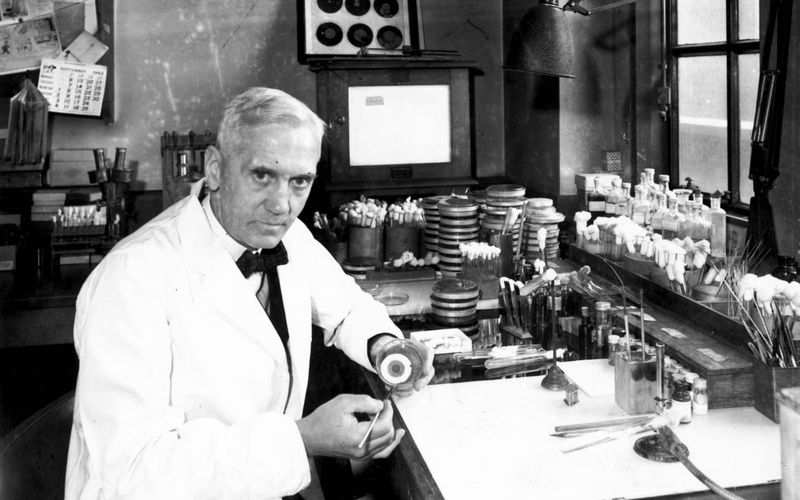
    2. Penicillin

    Penicillin was discovered when Alexander Fleming observed that mold contamination had killed bacteria in a Petri dish he had left unattended.

    This accident led to the development of antibiotics, one of the most important medical breakthroughs in history, saving millions of lives.

    3. Post-it Notes

    Post-it adhesive was originally considered a failure because it was not strong enough for industrial use.

    However, this “weak glue” turned out to be perfect for reusable sticky notes, becoming an essential office and study tool worldwide.

    4. Chocolate Chip Cookies

    Chocolate chip cookies were created when a baker added chocolate pieces to cookie dough expecting them to fully melt.

    Instead, the chocolate chunks remained solid, creating one of the most popular desserts in the world.

    5. Teflon

    Teflon was discovered when a scientist found a slippery white substance inside a pressurized container that had been forgotten.

    This material turned out to be extremely heat-resistant and non-stick, widely used in cookware and industrial applications.

    6. X-Rays

    X-rays were discovered by Wilhelm Röntgen while experimenting with vacuum tubes when he noticed invisible radiation passing through objects.

    This discovery revolutionized medicine by allowing doctors to see inside the human body without surgery.

    7. LSD

    LSD was accidentally synthesized while researching compounds derived from lysergic acid.

    Although controversial, it later became an important subject in neuroscience and psychology studies.

    8. Velcro

    Velcro was inspired by burrs that stuck to a dog’s fur during a walk in nature.

    This natural mechanism was replicated to create a simple and effective fastening system used in clothing and equipment.

    9. Filter Coffee

    Modern filtered coffee methods developed through experimentation and preparation mistakes that led to improved brewing techniques.

    Today, it is one of the most widely used coffee preparation methods globally.

    10. Tempered Glass

    Tempered glass was discovered after observing that accidentally treated glass fragments behaved differently and were much stronger.

    This led to safer materials used in cars, buildings, and electronic devices.

    Why accidental discoveries matter

    Accidental discoveries have played a huge role in shaping modern society. Without them, many essential technologies and medical advances would not exist.

    Key impacts include:

    • 🏥 Advances in modern medicine
    • 🏭 Industrial innovation and manufacturing improvements
    • 🍽️ Better food preparation techniques
    • 📱 Development of everyday technologies
    • 🔬 Expansion of scientific research

    Lessons from unexpected discoveries

    These innovations teach an important lesson: not all mistakes are failures. Sometimes, they are opportunities in disguise.

    Successful innovators often share common habits:

    • Observing unexpected results carefully
    • Asking questions instead of ignoring anomalies
    • Experimenting with curiosity
    • Learning from failures instead of discarding them

    ⚠️ Important insights

    • Not every mistake leads to discovery, but every discovery requires observation.
    • Curiosity is more valuable than perfection in innovation.
    • Many breakthroughs require persistence and repeated experimentation.
    • Unexpected results should always be analyzed, not ignored.

    The history of innovation proves that progress is not always linear. Many of the most important discoveries in the world were not planned—they were accidents that turned into opportunities through curiosity and observation.

    From medicine to technology and everyday household items, accidental discoveries have shaped the way we live today. These examples remind us that even mistakes can lead to powerful breakthroughs when approached with the right mindset.

    In the end, innovation is not only about success—it is also about seeing potential in the unexpected.

    The Deeper Impact of Accidental Innovation on Society, Industry, and Human Thinking

    Beyond individual inventions, accidental discoveries have shaped something much bigger: the way humans think, create, and develop solutions to problems. When we analyze these unexpected breakthroughs as a whole, we begin to see a pattern that goes far beyond science or technology. It becomes a story about adaptability, observation, and the ability to find value where others see failure.

    In modern society, innovation is often associated with planning, funding, and structured research. However, history repeatedly shows that many transformative ideas emerge outside of these controlled environments. This is not a coincidence—it reflects how complex systems naturally produce unexpected results.

    Understanding this phenomenon helps explain why accidental innovation is still relevant today and why it will continue to influence the future.

    How Accidental Discoveries Change Problem-Solving Mindsets

    One of the most important effects of accidental innovation is psychological. It changes how people interpret mistakes in both professional and personal contexts.

    In traditional thinking, errors are often seen as obstacles that must be eliminated. But in innovative environments, mistakes are increasingly viewed as “data points.” This shift in mindset encourages experimentation rather than fear of failure.

    When individuals or organizations accept that not every outcome must match expectations, they become more open to exploring unusual results. This openness often leads to improvements that would never appear in rigid systems.

    For example, in research and development environments, unexpected experimental outcomes are now frequently documented instead of discarded. Over time, this practice increases the probability of discovering new relationships between materials, behaviors, or systems.

    This mindset shift is one of the most valuable indirect consequences of accidental innovation: it trains people to think differently.

    Industrial Evolution Driven by Unexpected Results

    Industries across the world rely heavily on precision, but even in highly controlled manufacturing environments, unexpected results still occur. What matters is how companies respond to these deviations.

    In many cases, production anomalies have led to improvements in efficiency, safety, or product performance. Engineers often discover that certain variations in temperature, pressure, or composition produce stronger or more durable outcomes than originally intended.

    Instead of rejecting these differences, modern industries often investigate them further. This approach has contributed to the refinement of production techniques in sectors such as automotive manufacturing, electronics, construction materials, and energy systems.

    What makes this particularly important is that industrial innovation is not always about creating something entirely new. Sometimes, it is about discovering that a “mistake” performs better than the original design.

    Complexity in Modern Science Increases the Chance of Accidents

    As scientific systems become more advanced, they also become more unpredictable. Fields such as genetics, particle physics, nanotechnology, and climate science involve variables that are extremely difficult to fully control.

    This complexity increases the likelihood of unexpected results during experiments and simulations. However, rather than being purely negative, these unexpected outcomes often point researchers toward new areas of study.

    For example, anomalies in experimental data can suggest previously unknown interactions between variables. In some cases, they lead to entirely new scientific theories or models.

    The key challenge for modern science is not avoiding these surprises, but correctly interpreting them. With advanced computational tools and data analysis methods, researchers are now better equipped than ever to detect meaningful patterns within unexpected results.

    Human Creativity and the Value of Imperfection

    Human creativity does not operate in a strictly logical or linear way. Instead, it often emerges from experimentation, iteration, and even confusion.

    Many creative breakthroughs happen when individuals step outside structured thinking and explore alternative possibilities. This process naturally involves mistakes, but these mistakes can trigger new ways of thinking.

    In psychology, this is often linked to cognitive flexibility—the ability to adapt thinking patterns when faced with new or unexpected information. People with higher cognitive flexibility tend to be better at transforming errors into opportunities.

    This is why accidental discoveries are not just scientific events; they are also reflections of how the human brain works when solving complex problems.

    The Digital Age: Unpredictability in a Highly Controlled World

    In today’s digital environment, systems are designed to be stable, efficient, and predictable. However, even the most advanced technologies can produce unexpected outcomes.

    Large-scale digital systems, including cloud computing networks, machine learning models, and global communication platforms, involve millions or even billions of interactions every second. At this scale, small variations can produce unanticipated behavior.

    Interestingly, these unexpected behaviors are not always harmful. In some cases, they reveal opportunities for optimization, new features, or improved system performance.

    This is particularly relevant in artificial intelligence, where systems can sometimes generate solutions or patterns that were not explicitly programmed by humans. These emergent behaviors are an area of active research and demonstrate how complexity can lead to innovation.

    Everyday Life and the Quiet Presence of Accidental Innovation

    Not all accidental discoveries happen in laboratories or industrial environments. Many occur in everyday life, often without people realizing their significance at first.

    Small adjustments in routines, cooking methods, DIY projects, or personal experiments frequently lead to improvements that become permanent habits or solutions. While these may not become global inventions, they represent the same fundamental principle: unexpected results can create value.

    This everyday form of innovation is important because it shows that creativity is not limited to experts or scientists. Anyone can encounter useful “mistakes” simply by trying something new and paying attention to the outcome.

    Why Accidental Innovation Will Always Exist

    Some people assume that as technology becomes more advanced, accidents will disappear. However, this is unlikely. The reason is simple: complexity always produces uncertainty.

    No matter how precise a system becomes, it still interacts with other systems, environments, and human behavior. These interactions create conditions where unexpected results can occur.

    Instead of disappearing, accidental innovation may actually evolve. It may become more subtle, harder to detect, and more dependent on data interpretation rather than direct observation.

    This means that future innovation will likely rely even more on the ability to recognize patterns in unexpected outcomes.

    Final Reflection on the Role of the Unexpected

    When viewed collectively, accidental innovations reveal an important truth about progress: it is not always controlled, predictable, or linear. Instead, it is often shaped by observation, curiosity, and the willingness to explore uncertainty.

    These discoveries highlight a fundamental aspect of human progress—the ability to transform unpredictability into opportunity. Whether in science, industry, or daily life, the unexpected continues to play a silent but powerful role in shaping the world.

    As systems grow more advanced and interconnected, the importance of understanding and interpreting unexpected results will only increase. The future of innovation may depend less on avoiding mistakes and more on learning how to recognize their hidden potential.