Introduction
The way people live is changing in a quiet but powerful way. Not long ago, the idea of a smart home belonged mostly to science fiction or high-end technology showcases. Today, however, it is becoming an increasingly common reality in many parts of the world.
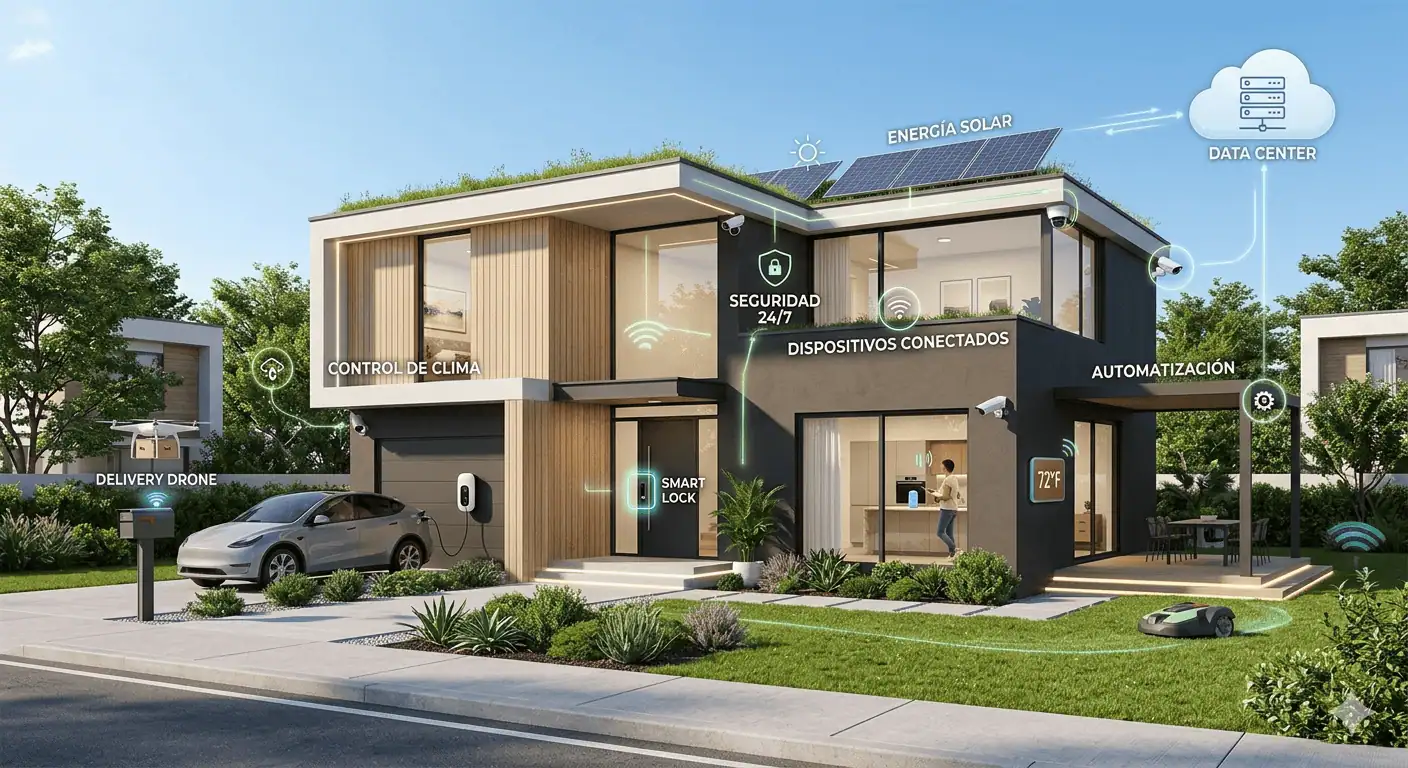
Modern smart homes are no longer just houses with connected devices. They are integrated systems capable of learning human behavior, automating daily routines, and improving comfort, safety, and energy efficiency with minimal human intervention. This transformation represents more than convenience; it reflects a fundamental shift in how humans interact with their living environments.
Technology is no longer something external that people simply use. It has become embedded within the home itself. From lights that adjust automatically to systems that regulate temperature based on occupancy, the home environment is evolving into something dynamic, responsive, and intelligent.
The gradual transformation of everyday living
The shift toward smart homes has not happened overnight. It has been a gradual evolution driven by advances in connectivity, sensors, and digital communication systems. The Internet of Things (IoT) has played a central role in this transformation by allowing everyday devices to communicate with each other in real time.
As a result, homes are no longer collections of independent objects but interconnected ecosystems. A lighting system can respond to motion sensors, a thermostat can adjust based on weather forecasts, and appliances can be controlled remotely through mobile applications.
This level of integration has changed how households function on a daily basis. Instead of manually managing each task, many actions now occur automatically based on pre-set rules or learned behavior patterns. The home becomes a system that reacts continuously to its environment and its occupants.
Artificial intelligence as the core of smart living
At the center of this transformation lies artificial intelligence. AI enables smart homes to move beyond simple automation and into adaptive behavior. Instead of only following programmed instructions, systems can now analyze patterns, learn routines, and make predictive decisions.
Over time, a smart home can identify when occupants typically wake up, when they leave the house, and when they return. Based on this information, it can adjust lighting, temperature, and energy usage automatically. This creates a living environment that feels increasingly personalized and efficient.
In more advanced systems, AI can even optimize energy consumption by analyzing usage patterns and suggesting improvements. It can detect inefficiencies, reduce unnecessary power usage, and contribute to lower energy costs while maintaining comfort.Security systems and real-time monitoring
One of the most significant developments in smart home technology is the improvement of security systems. Traditional locks and alarms have been replaced or enhanced by digital systems that offer real-time monitoring and remote access.
Modern smart security systems can include motion detection, facial recognition, and instant mobile alerts. Cameras are no longer passive recording devices; they are intelligent tools capable of analyzing activity and identifying unusual behavior.
Smart locks also allow remote access control, meaning doors can be locked or unlocked from anywhere in the world. Temporary digital access can be granted to guests or service providers without the need for physical keys.
When combined, these systems create a layered security network that reacts instantly to potential threats. In some cases, the home can automatically trigger lights, alarms, or notifications when suspicious activity is detected.
Security systems and real-time monitoring
One of the most significant developments in smart home technology is the improvement of security systems. Traditional locks and alarms have been replaced or enhanced by digital systems that offer real-time monitoring and remote access.
Modern smart security systems can include motion detection, facial recognition, and instant mobile alerts. Cameras are no longer passive recording devices; they are intelligent tools capable of analyzing activity and identifying unusual behavior.
Smart locks also allow remote access control, meaning doors can be locked or unlocked from anywhere in the world. Temporary digital access can be granted to guests or service providers without the need for physical keys.
When combined, these systems create a layered security network that reacts instantly to potential threats. In some cases, the home can automatically trigger lights, alarms, or notifications when suspicious activity is detected.
Energy efficiency and environmental impact
Energy efficiency has become one of the most important aspects of smart home development. As global concerns about energy consumption and sustainability continue to grow, smart homes offer practical solutions to reduce waste and optimize usage.
Automated lighting systems ensure that lights are only active when needed. Smart thermostats regulate indoor temperature based on occupancy and external weather conditions. Appliances can be scheduled to run during low-energy periods, reducing overall electricity demand.
In many modern systems, integration with renewable energy sources such as solar panels is also becoming common. Smart energy management systems can decide when to store, use, or distribute energy based on consumption patterns.
This approach not only reduces utility costs but also contributes to environmental sustainability by minimizing unnecessary energy consumption.
Daily life inside a smart home
Living in a smart home means experiencing a high level of automation in everyday routines. Many tasks that once required manual effort now occur seamlessly in the background.
Morning routines, for example, can be automated so that lights gradually increase in brightness, curtains open automatically, and coffee machines activate at a scheduled time. Temperature settings can adjust to ensure a comfortable environment upon waking.
During the day, the home continues to manage energy use, security, and comfort based on occupancy. At night, systems can dim lights, lock doors, activate security modes, and prepare the environment for rest.
The goal of these systems is not to replace human control but to reduce repetitive tasks and create a more comfortable living experience.
Technical requirements for smart home systems
Although smart home technology is becoming more accessible, certain foundational requirements are still necessary for proper implementation. A stable internet connection is essential, as most devices rely on cloud-based communication and real-time data exchange.
A compatible ecosystem is also required. This often includes platforms such as voice assistants or centralized applications that allow different devices to operate together. Without this integration, smart devices function independently and lose much of their potential.
Common hardware components include smart bulbs, smart plugs, security cameras, motion sensors, thermostats, and voice-controlled assistants. These devices form the basic infrastructure of a connected home.
As systems become more advanced, additional devices can be integrated to expand functionality and improve automation.
Benefits of smart home technology
Smart home systems offer a wide range of benefits that directly impact daily life. One of the most noticeable advantages is convenience. Automated systems reduce the need for repetitive manual tasks, allowing occupants to focus on more meaningful activities.
Another important benefit is energy savings. By optimizing electricity usage and reducing waste, smart homes help lower utility costs while promoting sustainable living practices.
Security is also significantly enhanced. Real-time monitoring, remote access, and intelligent alerts provide a higher level of protection compared to traditional systems.
Accessibility is another key advantage. Smart homes can greatly assist elderly individuals or people with mobility limitations by enabling voice control and automation of essential tasks.
Overall, smart home technology improves comfort, efficiency, and safety in a unified system.
Implementation process of a smart home
Transforming a traditional home into a smart home is typically a gradual process. It often begins with small-scale installations such as smart lighting or basic voice assistants.
Once the foundation is established, additional devices such as security cameras and smart thermostats are added. These systems are then integrated into a centralized platform for unified control.
As the ecosystem expands, automation routines are created to manage daily activities automatically. Over time, the system becomes more intelligent and responsive as it adapts to user behavior.
This gradual approach allows flexibility and scalability, making smart home technology accessible to a wide range of users.
Important recommendations for optimal use
For effective use of smart home systems, it is recommended to begin with essential devices and expand gradually. Compatibility between devices is crucial to ensure seamless integration and communication.
Network security should also be prioritized, as all connected devices rely on the home internet system. Regular updates and strong passwords help maintain system integrity.
It is also important to design automation based on actual user needs rather than overcomplicating the system. The most effective smart homes are those that simplify daily life rather than create unnecessary complexity.
Future developments of smart homes
The future of smart home technology is expected to move toward greater autonomy and intelligence. Systems will likely become more predictive, anticipating user needs before they are explicitly expressed.
Advancements in artificial intelligence will allow homes to make more complex decisions based on behavior, environment, and external data sources. Integration with renewable energy systems will also become more efficient and widespread.
The development of smart homes represents one of the most significant transformations in modern living. What began as simple automation has evolved into complex, intelligent systems capable of reshaping daily life.
While the technology continues to advance, its main purpose remains consistent: to improve comfort, efficiency, and safety. As innovation continues, smart homes are expected to become even more integrated into everyday life, gradually redefining what it means to live in a connected world.