Tag: smart living

  • How Devices Have Changed in the Last 30 Years: From Basic Tools to Intelligent Digital Ecosystems

    How Devices Have Changed in the Last 30 Years: From Basic Tools to Intelligent Digital Ecosystems

    Over the past 30 years, technology has reshaped human life in ways that were once considered science fiction. Devices that used to serve only one basic function have evolved into powerful, multifunctional tools that are deeply integrated into everyday routines. This transformation has not only improved convenience but has also completely redefined how people communicate, learn, work, and entertain themselves.

    In the early 1990s, digital devices were limited in capability and accessibility. Mobile phones were primarily used for voice communication, computers were large and expensive machines used mostly in offices, and televisions were passive entertainment devices with limited channels. Internet access was slow, rare, and often expensive. Most people interacted with technology only when necessary.

    Fast forward to today, and the situation is completely different. Nearly every device is connected, intelligent, and capable of performing multiple complex tasks at once. Smartphones have become portable computers. Laptops rival traditional desktop systems in power. Smart TVs connect directly to streaming platforms. Even household appliances are now part of a connected digital ecosystem.

    This evolution represents more than just technological progress. It reflects a deeper transformation in human behavior, global communication, and economic structures. The way people interact with information and with each other has changed permanently.

    The Evolution of Everyday Devices Over 30 Years

    The most visible transformation has taken place in mobile technology. In the 1990s, mobile phones were large, heavy, and limited to basic functions such as calling and sending short text messages. The user experience was minimal, and devices were often seen as luxury items rather than necessities.

    Today’s smartphones are entirely different. They function as all-in-one digital hubs that combine communication, entertainment, productivity, and navigation. A modern smartphone allows users to browse the internet, attend video conferences, manage finances, edit high-quality videos, and even control smart home systems. Artificial intelligence enhances many of these functions, from predictive text and voice assistants to advanced camera optimization and real-time language translation.

    Computers have undergone a similar transformation. In the past, desktop computers were large machines with limited processing power and storage. Software was basic, and internet connectivity was slow or non-existent for many users. Today, computers are compact, extremely powerful, and capable of handling advanced tasks such as machine learning, 3D rendering, software development, and cloud computing.

    The rise of laptops and ultrabooks has completely changed professional environments. Work is no longer tied to physical offices. People can now work remotely from anywhere in the world, collaborate in real time across different countries, and access powerful cloud-based tools that were not available decades ago. This shift has given rise to digital nomads and global remote work culture.

    Television technology has also experienced a major revolution. In the past, TVs were analog devices with limited channels and no interactivity. Viewers had no control over content schedules and were restricted to broadcast programming. Modern Smart TVs, however, are fully connected entertainment systems. They allow users to stream content on demand, browse the internet, install applications, and interact using voice commands. This shift has completely changed how people consume media.

    Audio devices have also evolved significantly. Traditional formats such as cassette tapes, CDs, and radio broadcasts have been replaced by digital streaming platforms. Music is now accessible instantly through services that offer millions of songs. Wireless headphones, Bluetooth speakers, and smart assistants have changed how people interact with audio content, making it more personalized and portable than ever before.

    Photography and video recording have undergone one of the most dramatic transformations. Film-based cameras required physical rolls, careful exposure settings, and time-consuming development processes. Digital cameras and smartphone cameras now use advanced sensors and artificial intelligence to capture, process, and enhance images instantly. Features such as night mode, portrait enhancement, and facial recognition have made high-quality photography accessible to everyone.

    The Impact of Device Evolution on Modern Society

    The evolution of devices has had a profound impact on global society. Communication is now instant, global, and continuous. People can send messages, make video calls, and share multimedia content across continents in seconds. This has strengthened personal relationships and transformed business communication on a global scale.

    In the workplace, digital devices have created entirely new industries and job roles. Fields such as software engineering, data science, cybersecurity, digital marketing, and content creation depend entirely on modern technology. Many traditional jobs have also been transformed by digital tools, increasing efficiency and productivity.

    Education has become more accessible and flexible due to digital devices. Online learning platforms, virtual classrooms, and educational apps allow students to study from anywhere in the world. Knowledge is no longer limited to physical classrooms or libraries. This democratization of education has significantly increased learning opportunities for people in different regions.

    Entertainment has also shifted from passive consumption to interactive participation. Users now choose what they want to watch, when they want to watch it, and how they want to interact with content. Streaming platforms, online gaming, and social media have created a continuous digital entertainment ecosystem that is always active and evolving.

    Key Factors That Made This Evolution Possible

    Several important technological advancements have made this transformation possible. One of the most significant is the development of high-speed internet. Without fast and reliable connectivity, modern digital ecosystems would not exist. The internet has become the backbone of all connected devices.

    Another critical factor is hardware miniaturization. Over time, electronic components have become smaller, faster, and more efficient. This has allowed manufacturers to build powerful devices that fit into small, portable designs such as smartphones and wearable technology.

    Battery technology has also improved dramatically. Modern lithium-ion and emerging solid-state batteries provide longer life and faster charging capabilities, making mobile devices practical for daily use.

    Artificial intelligence is another major driver of change. AI systems are now integrated into nearly every modern device. They enable voice assistants, recommendation systems, predictive typing, image processing, and smart automation features that adapt to user behavior.

    Cloud computing has also revolutionized the digital world. Instead of relying solely on local storage and processing, users can now access powerful remote servers that handle data storage, computation, and application hosting from anywhere in the world.

    Benefits of Modern Device Evolution

    One of the most important benefits is global connectivity. People are no longer limited by geography when communicating or collaborating. This has created a more connected and integrated global society.

    Access to information has also dramatically improved. Search engines, online databases, and educational platforms provide instant access to knowledge on virtually any topic. This has reduced barriers to education and increased opportunities for learning worldwide.

    The digital economy has created millions of new jobs and industries. From app development and e-commerce to content creation and online services, technology has opened new paths for income generation and entrepreneurship.

    Productivity has significantly increased thanks to automation and digital tools. Tasks that once required hours can now be completed in minutes using software solutions and AI-powered systems.

    Daily life has become more convenient. Activities such as banking, shopping, navigation, communication, and entertainment can now be managed entirely through digital devices.

    How People Adapt to Modern Devices

    Adapting to modern technology begins with understanding basic digital tools. Smartphones, computers, and online platforms are now essential in daily life, so familiarity with them is important.

    Developing digital literacy is the next step. This includes learning how to use the internet safely, managing digital accounts, and understanding basic cybersecurity practices.

    Regular practice is essential for building confidence. The more people use digital devices, the more comfortable they become with advanced features and applications.

    Continuous learning is also necessary because technology evolves rapidly. Online tutorials, courses, and digital communities provide opportunities to stay updated.

    Exploring different applications and tools helps users understand how technology can improve productivity, communication, and lifestyle efficiency.

    Important Tips for Navigating the Digital Age

    One key principle is to embrace change. Technology will continue to evolve, and adapting is essential for staying relevant in a digital world.

    It is also important to avoid overdependence on automation. While devices are powerful, maintaining critical thinking and basic skills remains important.

    Digital security should always be a priority. Protecting personal information and practicing safe online behavior is essential in a connected world.

    Technology should be used intentionally. Devices should enhance life quality rather than create distraction or dependency.

    Finally, lifelong learning is one of the most valuable habits in the digital age. Those who continue to learn and adapt will benefit the most from technological progress.

    Over the past 30 years, technological devices have evolved from simple, single-function tools into highly intelligent, interconnected systems that shape nearly every aspect of modern life. This transformation has fundamentally changed how people communicate, work, learn, and interact with the world.

    The evolution of devices has created a more connected, efficient, and digital society. Tasks that once required multiple tools and significant effort can now be completed instantly through integrated systems powered by artificial intelligence and cloud computing.

    As technology continues to advance, devices will become even more intelligent, personalized, and integrated into daily life. Understanding this evolution is essential for adapting to the future and making the most of the opportunities that digital innovation continues to create.
  • The New Generation of Smart Homes: How Technology Is Transforming Modern Living

    The New Generation of Smart Homes: How Technology Is Transforming Modern Living

    Introduction

    The way people live is changing in a quiet but powerful way. Not long ago, the idea of a smart home belonged mostly to science fiction or high-end technology showcases. Today, however, it is becoming an increasingly common reality in many parts of the world.

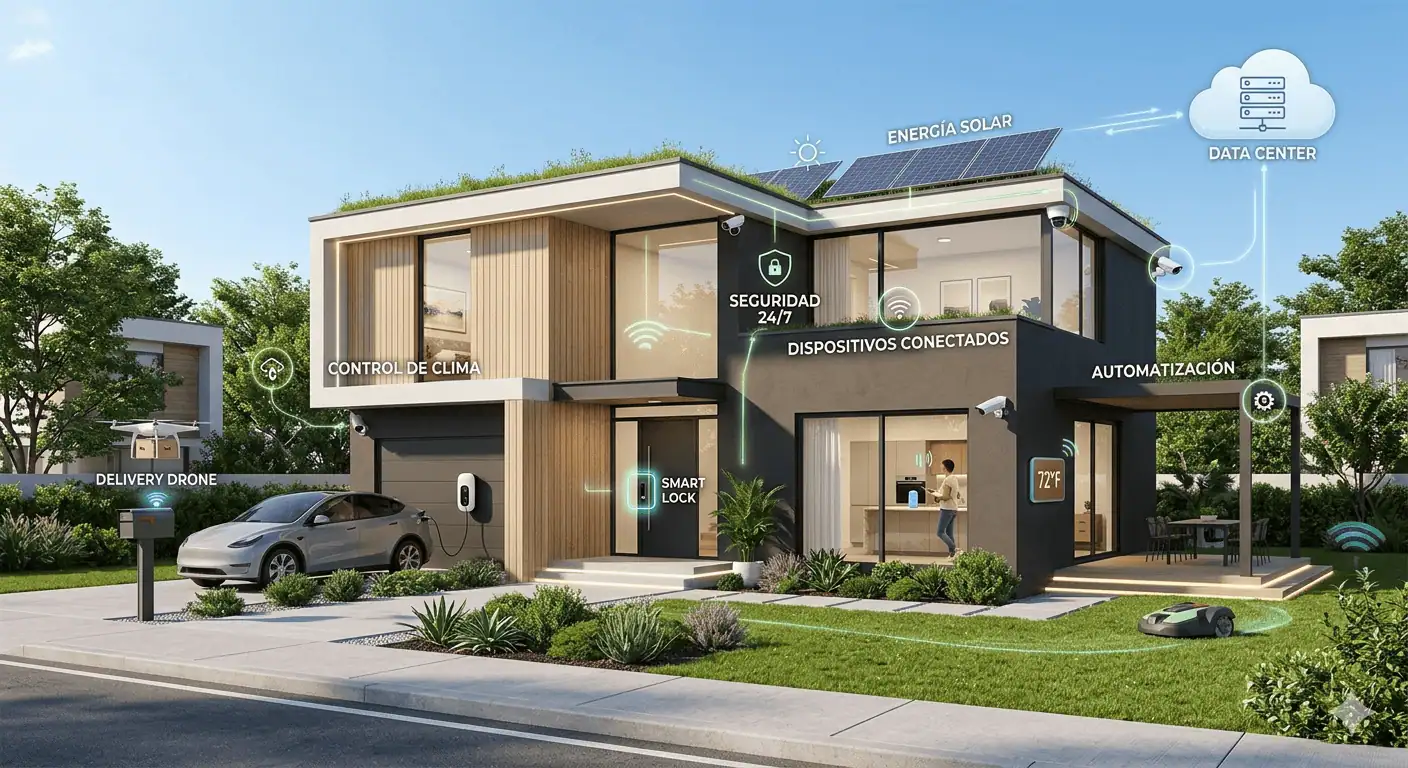
    Modern smart homes are no longer just houses with connected devices. They are integrated systems capable of learning human behavior, automating daily routines, and improving comfort, safety, and energy efficiency with minimal human intervention. This transformation represents more than convenience; it reflects a fundamental shift in how humans interact with their living environments.

    Technology is no longer something external that people simply use. It has become embedded within the home itself. From lights that adjust automatically to systems that regulate temperature based on occupancy, the home environment is evolving into something dynamic, responsive, and intelligent.

    The gradual transformation of everyday living

    The shift toward smart homes has not happened overnight. It has been a gradual evolution driven by advances in connectivity, sensors, and digital communication systems. The Internet of Things (IoT) has played a central role in this transformation by allowing everyday devices to communicate with each other in real time.

    As a result, homes are no longer collections of independent objects but interconnected ecosystems. A lighting system can respond to motion sensors, a thermostat can adjust based on weather forecasts, and appliances can be controlled remotely through mobile applications.

    This level of integration has changed how households function on a daily basis. Instead of manually managing each task, many actions now occur automatically based on pre-set rules or learned behavior patterns. The home becomes a system that reacts continuously to its environment and its occupants.

    Artificial intelligence as the core of smart living

    At the center of this transformation lies artificial intelligence. AI enables smart homes to move beyond simple automation and into adaptive behavior. Instead of only following programmed instructions, systems can now analyze patterns, learn routines, and make predictive decisions.

    Over time, a smart home can identify when occupants typically wake up, when they leave the house, and when they return. Based on this information, it can adjust lighting, temperature, and energy usage automatically. This creates a living environment that feels increasingly personalized and efficient.

    In more advanced systems, AI can even optimize energy consumption by analyzing usage patterns and suggesting improvements. It can detect inefficiencies, reduce unnecessary power usage, and contribute to lower energy costs while maintaining comfort.Security systems and real-time monitoring

    One of the most significant developments in smart home technology is the improvement of security systems. Traditional locks and alarms have been replaced or enhanced by digital systems that offer real-time monitoring and remote access.

    Modern smart security systems can include motion detection, facial recognition, and instant mobile alerts. Cameras are no longer passive recording devices; they are intelligent tools capable of analyzing activity and identifying unusual behavior.

    Smart locks also allow remote access control, meaning doors can be locked or unlocked from anywhere in the world. Temporary digital access can be granted to guests or service providers without the need for physical keys.

    When combined, these systems create a layered security network that reacts instantly to potential threats. In some cases, the home can automatically trigger lights, alarms, or notifications when suspicious activity is detected.

    Security systems and real-time monitoring

    One of the most significant developments in smart home technology is the improvement of security systems. Traditional locks and alarms have been replaced or enhanced by digital systems that offer real-time monitoring and remote access.

    Modern smart security systems can include motion detection, facial recognition, and instant mobile alerts. Cameras are no longer passive recording devices; they are intelligent tools capable of analyzing activity and identifying unusual behavior.

    Smart locks also allow remote access control, meaning doors can be locked or unlocked from anywhere in the world. Temporary digital access can be granted to guests or service providers without the need for physical keys.

    When combined, these systems create a layered security network that reacts instantly to potential threats. In some cases, the home can automatically trigger lights, alarms, or notifications when suspicious activity is detected.

    Energy efficiency and environmental impact

    Energy efficiency has become one of the most important aspects of smart home development. As global concerns about energy consumption and sustainability continue to grow, smart homes offer practical solutions to reduce waste and optimize usage.

    Automated lighting systems ensure that lights are only active when needed. Smart thermostats regulate indoor temperature based on occupancy and external weather conditions. Appliances can be scheduled to run during low-energy periods, reducing overall electricity demand.

    In many modern systems, integration with renewable energy sources such as solar panels is also becoming common. Smart energy management systems can decide when to store, use, or distribute energy based on consumption patterns.

    This approach not only reduces utility costs but also contributes to environmental sustainability by minimizing unnecessary energy consumption.

    Daily life inside a smart home

    Living in a smart home means experiencing a high level of automation in everyday routines. Many tasks that once required manual effort now occur seamlessly in the background.

    Morning routines, for example, can be automated so that lights gradually increase in brightness, curtains open automatically, and coffee machines activate at a scheduled time. Temperature settings can adjust to ensure a comfortable environment upon waking.

    During the day, the home continues to manage energy use, security, and comfort based on occupancy. At night, systems can dim lights, lock doors, activate security modes, and prepare the environment for rest.

    The goal of these systems is not to replace human control but to reduce repetitive tasks and create a more comfortable living experience.

    Technical requirements for smart home systems

    Although smart home technology is becoming more accessible, certain foundational requirements are still necessary for proper implementation. A stable internet connection is essential, as most devices rely on cloud-based communication and real-time data exchange.

    A compatible ecosystem is also required. This often includes platforms such as voice assistants or centralized applications that allow different devices to operate together. Without this integration, smart devices function independently and lose much of their potential.

    Common hardware components include smart bulbs, smart plugs, security cameras, motion sensors, thermostats, and voice-controlled assistants. These devices form the basic infrastructure of a connected home.

    As systems become more advanced, additional devices can be integrated to expand functionality and improve automation.

    Benefits of smart home technology

    Smart home systems offer a wide range of benefits that directly impact daily life. One of the most noticeable advantages is convenience. Automated systems reduce the need for repetitive manual tasks, allowing occupants to focus on more meaningful activities.

    Another important benefit is energy savings. By optimizing electricity usage and reducing waste, smart homes help lower utility costs while promoting sustainable living practices.

    Security is also significantly enhanced. Real-time monitoring, remote access, and intelligent alerts provide a higher level of protection compared to traditional systems.

    Accessibility is another key advantage. Smart homes can greatly assist elderly individuals or people with mobility limitations by enabling voice control and automation of essential tasks.

    Overall, smart home technology improves comfort, efficiency, and safety in a unified system.

    Implementation process of a smart home

    Transforming a traditional home into a smart home is typically a gradual process. It often begins with small-scale installations such as smart lighting or basic voice assistants.

    Once the foundation is established, additional devices such as security cameras and smart thermostats are added. These systems are then integrated into a centralized platform for unified control.

    As the ecosystem expands, automation routines are created to manage daily activities automatically. Over time, the system becomes more intelligent and responsive as it adapts to user behavior.

    This gradual approach allows flexibility and scalability, making smart home technology accessible to a wide range of users.

    Important recommendations for optimal use

    For effective use of smart home systems, it is recommended to begin with essential devices and expand gradually. Compatibility between devices is crucial to ensure seamless integration and communication.

    Network security should also be prioritized, as all connected devices rely on the home internet system. Regular updates and strong passwords help maintain system integrity.

    It is also important to design automation based on actual user needs rather than overcomplicating the system. The most effective smart homes are those that simplify daily life rather than create unnecessary complexity.

    Future developments of smart homes

    The future of smart home technology is expected to move toward greater autonomy and intelligence. Systems will likely become more predictive, anticipating user needs before they are explicitly expressed.

    Advancements in artificial intelligence will allow homes to make more complex decisions based on behavior, environment, and external data sources. Integration with renewable energy systems will also become more efficient and widespread.

    The development of smart homes represents one of the most significant transformations in modern living. What began as simple automation has evolved into complex, intelligent systems capable of reshaping daily life.

    While the technology continues to advance, its main purpose remains consistent: to improve comfort, efficiency, and safety. As innovation continues, smart homes are expected to become even more integrated into everyday life, gradually redefining what it means to live in a connected world.